
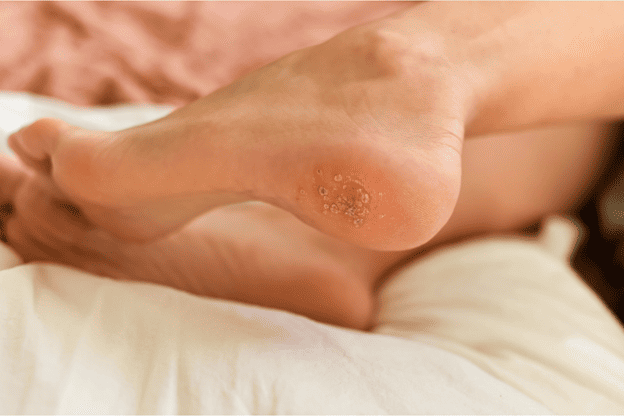
Plantar warts can be frustrating, especially when they persist despite home remedies or previous treatment. Because they develop on weight-bearing areas of the foot, they can sometimes make standing and walking uncomfortable. Patients may also hesitate to pursue treatments that involve freezing, cutting, or physically removing wart tissue.
SWIFT offers a different approach. It is a non-invasive microwave treatment that can be used for plantar warts without physically cutting into the wart or using cryotherapy to freeze it. Instead, SWIFT delivers controlled microwave energy to the affected tissue, with research suggesting that the local effect may help stimulate immune activity involved in the body’s response to HPV-infected tissue.
SWIFT is not appropriate for every plantar wart, and treatment results can vary. At Associated Podiatrists, P.C. in Novi, we can evaluate the lesion, confirm whether it is consistent with a plantar wart, and discuss whether SWIFT or another treatment approach may be appropriate.
What Are Plantar Warts and Why Can They Be Difficult to Treat?
Plantar warts are skin growths caused by certain types of human papillomavirus (HPV). They typically develop on the soles of the feet and may grow inward because of the pressure created by standing and walking.
A plantar wart may have a rough or grainy appearance and can interrupt the normal lines of the skin. Some plantar warts are painless, while others become uncomfortable when pressure is placed on them. Small dark dots may also be visible within the lesion.
Because plantar warts are associated with HPV infection, addressing only some of the visible thickened skin does not necessarily address the entire problem. This can help explain why some warts persist or recur following treatment.
Treatment can also become more challenging when a wart has been present for a long time or has not responded to previous approaches. Depending on the individual case, treatment options may include topical medications, cryotherapy, procedural treatment, laser treatment, microwave therapy, or other approaches.
It is also important to have a foot lesion evaluated before assuming it is a plantar wart. Calluses, corns, and other skin conditions can sometimes resemble warts. Proper identification helps determine which treatment is appropriate.
Also Read: Common foot & ankle disorders
Can Plantar Warts Be Treated Without Cutting or Freezing?
Yes. Cryotherapy and procedures that physically treat wart tissue are not the only options available for plantar warts.
Cryotherapy, commonly called freezing, uses very cold temperatures to damage targeted wart tissue. Other treatments may use topical medications or procedural approaches to address the lesion.
SWIFT works differently. Rather than cutting into the wart or freezing it, the treatment uses an applicator placed against the affected area to deliver controlled microwave energy.
This can make SWIFT worth discussing for patients interested in plantar wart treatment without cutting or cryotherapy. However, no single approach is appropriate for every wart. Treatment selection can depend on the type and location of the lesion, how long it has been present, previous treatment attempts, symptoms, and individual health considerations.
How Does SWIFT Treat Plantar Warts?
SWIFT delivers a brief, controlled application of microwave energy to the wart through an applicator placed against the affected area. The treatment is performed externally and does not require the clinician to cut into the wart or freeze it.
Research suggests that the local effect created by microwave treatment may help stimulate immune activity involved in the body’s response to HPV-infected tissue. Rather than mechanically removing the visible portion of the wart, SWIFT uses controlled energy as part of an approach intended to address the affected tissue and encourage an immune response.
Treatment does not guarantee that the wart will disappear immediately. Response varies, and more than one treatment session may be recommended depending on the individual case.
SWIFT vs. Freezing and Other Plantar Wart Treatments
There is no universal best treatment for every plantar wart. Understanding how common approaches differ can make it easier to discuss your options with a podiatrist.
Cryotherapy: Freezing uses extremely cold temperatures to damage targeted wart tissue. It is commonly used for warts, although treatment response varies and discomfort can occur.
Topical medications: Treatments such as salicylic acid gradually break down wart tissue and may require repeated applications and consistent use.
Debridement or other procedural treatment: A podiatrist may remove thickened tissue or use other procedures depending on the wart and treatment plan.
Laser and other treatments: Certain persistent or difficult-to-treat warts may be considered for other procedural approaches depending on the individual circumstances.
SWIFT: Microwave energy is delivered externally to the wart without cutting into the lesion or freezing it.
Which approach makes sense depends on factors such as the wart’s location, size, duration, symptoms, previous treatment attempts, and other individual considerations.
Does SWIFT Wart Treatment Hurt?
SWIFT does not require cutting into the wart or freezing it, but that does not mean the treatment is sensation-free. Patients may experience warmth or brief discomfort while the microwave energy is applied, and individual experiences vary.
Your podiatrist can explain what treatment may feel like based on the location and characteristics of the wart. The absence of cutting or cryotherapy should not be interpreted as a guarantee that treatment will be painless.
What to Expect During SWIFT Plantar Wart Treatment
The first step is a clinical evaluation. Your podiatrist will examine the lesion to determine whether it appears to be a plantar wart and whether SWIFT is an appropriate treatment option.
If SWIFT is selected, the clinician places the applicator against the affected area and delivers controlled microwave energy. Treatment is performed externally without cutting into the wart. Some patients may experience warmth, pressure, or discomfort during the application.
The number of treatments can vary. There is no universal number of sessions that guarantees wart clearance, and your treatment plan may depend on how the wart responds.
After treatment, your clinician can provide instructions based on your particular situation. Follow-up may be recommended to evaluate the wart’s response and determine whether additional treatment is appropriate.
Who May Be a Candidate for SWIFT Wart Treatment?
Not every foot lesion is appropriate for SWIFT. A podiatrist should first determine whether the lesion is consistent with a plantar wart.
During an evaluation, the clinician may consider:
- The appearance and characteristics of the lesion
- Its size and location
- How long the wart has been present
- Whether it causes pain or interferes with walking
- Previous treatments and their results
- The condition of the surrounding skin
- The patient’s overall medical circumstances
Professional evaluation is particularly important when a foot lesion is changing, bleeding, unusually painful, or difficult to identify. Not every growth on the sole of the foot is a wart, and conditions that look similar may require different treatment.
Once the lesion has been evaluated, your podiatrist can discuss whether SWIFT is appropriate or whether another treatment approach may be better suited to the individual situation.
Is SWIFT Effective for Plantar Warts?
Research suggests that microwave therapy can help some patients with plantar warts, including persistent or treatment-resistant lesions, but the available evidence does not support guaranteeing a particular outcome for every patient.
Published studies have reported varying outcomes. Differences in study design, patient populations, treatment protocols, and other factors may contribute to those results.
For that reason, SWIFT is better viewed as a treatment option with clinical evidence supporting its use rather than a guaranteed way to eliminate every plantar wart. Individual response may depend on the characteristics of the wart, previous treatment, and other patient-specific factors.
Also Read: Plantar Warts: Take the Swift Road to Recovery
SWIFT Treatment for Plantar Warts in Novi
At Associated Podiatrists, P.C. in Novi, we evaluate plantar warts and other foot lesions before recommending treatment. Because calluses, corns, and other skin conditions can sometimes resemble warts, confirming what is causing the lesion is an important first step.
If the lesion is a plantar wart, we can discuss available treatment options and whether SWIFT is appropriate based on the wart’s location, size, duration, symptoms, previous treatment, and your individual health considerations.
For patients interested in a non-invasive plantar wart treatment that does not require cutting into the lesion or cryotherapy, SWIFT may be one option to discuss during an evaluation. The goal is to select an approach based on the characteristics of the wart rather than assuming one treatment is appropriate for every patient.
Frequently Asked Questions
Can SWIFT Treat Plantar Warts Without Cutting or Freezing?
Yes. SWIFT uses an external applicator to deliver controlled microwave energy to the affected tissue without physically cutting into the wart or freezing it with cryotherapy. Whether SWIFT is appropriate depends on the characteristics of the lesion and the individual patient.
How Does SWIFT Work for Plantar Warts?
SWIFT delivers controlled microwave energy to the affected tissue. Research suggests that the local effect may stimulate immune processes involved in the body’s response to HPV-infected tissue. Treatment response varies, so SWIFT should not be viewed as a guaranteed way to clear every plantar wart.
Does SWIFT Wart Treatment Hurt?
Patients may experience warmth or discomfort while the microwave energy is applied. Individual experiences vary, and the fact that SWIFT does not involve cutting or freezing does not mean treatment will necessarily be painless.
How Many SWIFT Treatments Might I Need for a Plantar Wart?
The number of sessions varies depending on the individual case and how the wart responds. There is no universal number of SWIFT treatments that guarantees clearance. Your podiatrist can evaluate your response and determine whether additional treatment is appropriate.
Can SWIFT Treat Plantar Warts That Have Come Back After Other Treatments?
Research has investigated microwave treatment for persistent and treatment-resistant plantar warts, so SWIFT may be an option to discuss when previous approaches have not cleared the wart. However, prior treatment failure does not automatically mean SWIFT will be appropriate or successful. A podiatric evaluation can help determine the next treatment option.
Where Can I Get SWIFT Treatment for Plantar Warts in Novi?
Associated Podiatrists, P.C. provides podiatric care in Novi, Michigan. If you are interested in SWIFT for a plantar wart, our team can evaluate the lesion, review previous treatment attempts, and discuss whether SWIFT or another treatment option may be appropriate.
Find Out if SWIFT Is an Option for Your Plantar WartFind Out if SWIFT Is an Option for Your Plantar Wart
A persistent lesion on the bottom of your foot should be properly identified before deciding how to treat it. If it is a plantar wart, SWIFT may provide an option that does not require cutting into the wart or freezing it with cryotherapy, but it is not the right treatment for every patient or every wart.
At Associated Podiatrists, P.C. in Novi, we can evaluate the lesion, discuss previous treatment attempts, and explain the options that may be appropriate for your foot. Schedule an evaluation to find out whether SWIFT or another plantar wart treatment makes sense for your situation.