
Heel pain is one of the most common reasons people visit a podiatrist. In many cases, symptoms improve with rest, stretching, ice, supportive footwear, or over-the-counter shoe inserts. However, not everyone experiences lasting relief. If you’ve been dealing with heel pain for months despite trying conservative care, it may be time to look beyond symptom management and determine why the pain continues.
Chronic heel pain often develops because the injured tissue has not fully healed or because another foot condition is contributing to the discomfort. After a careful evaluation, your podiatrist may recommend Extracorporeal Shockwave Therapy (ESWT) as part of your treatment plan. This non-surgical heel pain treatment is designed to support the body’s natural healing response without requiring an incision or lengthy recovery.
If you’re looking for shockwave therapy Novi residents trust for chronic heel pain, the first step is determining what’s causing your symptoms.
Why Some Heel Pain Becomes Chronic
Many people assume heel pain will eventually disappear on its own. While that is true for some injuries, others continue because the underlying problem remains untreated.
Several conditions may contribute to chronic heel pain, including:
- Plantar fasciitis
- Heel spurs
- Achilles tendon problems
- Repetitive stress from work or sports
- Poor foot mechanics or abnormal gait
- Delayed healing of injured tissue
- Continuing high-impact activities despite pain
Plantar fasciitis is one of the leading causes of heel pain. It develops when the thick band of tissue supporting the arch of the foot becomes irritated from repeated strain. Although heel spurs are often found on X-rays, they are not always responsible for the pain.
When symptoms continue for several months, simply reducing discomfort is often not enough. Identifying the source of the problem allows your foot doctor to recommend treatment that addresses the injured tissue rather than only masking symptoms.
Also Read: Here are 10 signs you should see a Podiatrist
What Is Shockwave Therapy?
Extracorporeal Shockwave Therapy, commonly called ESWT, is a non-invasive procedure that uses acoustic waves to treat certain chronic musculoskeletal conditions affecting the foot and ankle.
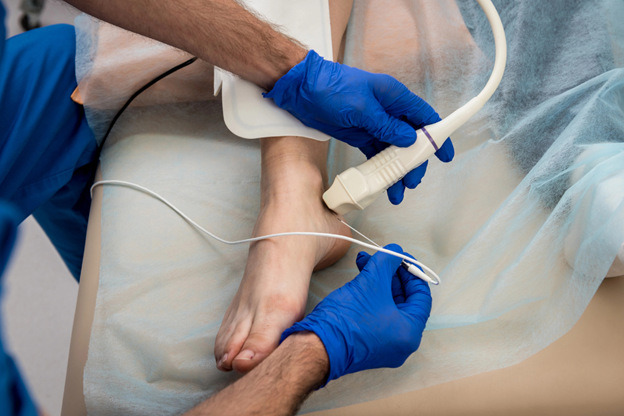
During treatment, a handheld device delivers controlled sound waves to the injured area. These acoustic waves pass through the skin without requiring a surgical incision.
The procedure is performed in the office and usually takes only a short time to complete. Depending on the condition being treated, your podiatrist may recommend a series of treatment sessions over several weeks. The exact number of treatments varies from patient to patient based on the diagnosis and response to care.
How Shockwave Therapy May Help Heel Pain
Researchers continue studying how ESWT supports tissue healing, but it is believed to work by stimulating the body’s natural repair processes.
Shockwave therapy for heel pain relief may:
- Stimulate the body’s natural healing response
- Increase blood circulation in the injured tissue
- Support tissue repair
- Reduce long-standing inflammation
- Improve foot function over time
Rather than simply covering up pain, ESWT is intended to promote healing within damaged tissue. Results vary, and improvement may develop gradually as healing continues after treatment. Because every patient heals differently, your podiatrist will discuss realistic expectations based on your diagnosis.
Who May Be a Good Candidate?
Shockwave therapy for chronic heel pain in Novi, MI, may be considered for patients who:
- Have heel pain lasting several months
- Have chronic plantar fasciitis
- Have already tried stretching, orthotics, supportive footwear, physical therapy, activity modification, or medication without enough improvement
- Would like to avoid surgery when appropriate
Being a candidate depends on more than how long your foot has been hurting. The cause of your pain must first be identified. During your visit, your podiatrist will determine whether shockwave therapy for plantar fasciitis or another condition fits your individual situation.
When Shockwave Therapy May Not Be the Right Treatment
One of the most important parts of treating heel pain is making the correct diagnosis.
Although many patients ask, “Can shockwave therapy help chronic heel pain?” the answer depends entirely on what is causing the pain.
Shockwave therapy may not be appropriate if heel pain is related to:
- Stress fractures
- Nerve entrapment
- Significant tendon tears
- Inflammatory arthritis
- Certain other medical conditions requiring different care
For example, a stress fracture may require immobilization rather than acoustic wave treatment. Nerve problems may need a different diagnostic approach altogether. Because several conditions can produce similar symptoms, an examination is much more valuable than guessing based on internet searches.
This is why an experienced podiatrist focuses on diagnosing the source of heel pain before recommending any treatment.
What to Expect During Treatment
If you’re considering shockwave therapy for stubborn heel pain, your visit usually begins with a detailed evaluation.
Your podiatrist will review your symptoms, examine your foot, discuss previous treatments, and determine whether imaging studies such as X-rays are needed.
During the ESWT procedure:
- A handheld device is placed over the painful area.
- Acoustic waves are delivered to the injured tissue.
- Most treatments take only a short time.
- Some patients notice mild discomfort during the procedure, but the intensity can often be adjusted based on the treatment plan.
Recovery is generally straightforward because no surgical incision is involved. Many patients can return to normal daily activities soon afterward, although your podiatrist may recommend temporarily reducing strenuous activity while healing continues. Follow-up appointments help monitor your progress and determine whether additional treatment sessions are appropriate.
Also Read: Preventing Foot and Ankle Injuries
Shockwave Therapy vs. Other Heel Pain Treatments
Shockwave therapy is one part of a larger treatment pathway rather than a replacement for every other approach.
Depending on the diagnosis, your podiatrist may recommend:
Stretching: Often one of the first treatments for plantar fasciitis and tight calf muscles.
Physical Therapy: Can improve flexibility, strength, and walking mechanics.
Custom Orthotics: Help redistribute pressure and improve foot alignment.
Anti-inflammatory Medication: May reduce discomfort during flare-ups but does not repair injured tissue.
Cortisone Injections: Sometimes recommended for selected patients, although repeated injections are not appropriate for everyone.
Immobilization: Walking boots may allow injured tissues or stress fractures to heal.
Surgery: Usually considered only after conservative treatment has not provided enough improvement and when the diagnosis supports surgical intervention.
For many patients hoping to avoid surgery, ESWT may be considered after other conservative treatments have not provided sufficient relief.
What Patients Often Overlook About Chronic Heel Pain
There are several common misconceptions about heel pain.
First, heel pain is not always plantar fasciitis. Multiple conditions can produce similar symptoms.
Second, heel spurs are not always the reason your heel hurts. Many people have heel spurs without experiencing pain, while others have significant discomfort without a large spur.
Another common mistake is waiting several months before seeing a podiatrist. Continuing normal activities while pain continues may delay healing. A heel spur may appear on an X-ray, but it is not always the source of heel pain.
Finally, treating symptoms without addressing foot mechanics can increase the chance that discomfort returns. The best treatment for plantar fasciitis without surgery depends on understanding why the tissue became irritated in the first place.
When It’s Time to See a Heel Pain Specialist
You should schedule an evaluation if:
- Heel pain has lasted longer than several weeks.
- Pain limits work, walking, or exercise.
- Morning heel pain continues to worsen.
- Symptoms repeatedly return.
- Conservative treatments have not provided enough improvement.
A podiatrist can identify the cause of your foot pain and recommend treatment based on your diagnosis instead of relying on trial and error.
Also Read: Suffering from Plantar Fasciitis?
Conclusion
Chronic heel pain should not simply become part of everyday life. If stretching, rest, shoe changes, or orthotics have not provided lasting relief, there may be an underlying condition that needs further evaluation.
Many patients improve after receiving the right diagnosis and an individualized treatment plan. For appropriate candidates, shockwave therapy may provide a non-surgical approach that supports healing while helping address chronic heel pain.
A detailed examination is the best way to determine whether ESWT or another treatment is most appropriate for your condition. If you need a podiatrist for chronic heel pain, Associated Podiatrists, P.C. can evaluate your condition and recommend the most appropriate treatment.
Schedule an Evaluation
If you’re experiencing chronic heel pain that won’t go away, schedule an evaluation with Associated Podiatrists, P.C. A thorough examination can identify the source of your symptoms and determine whether shockwave therapy or another treatment is the right approach for your individual needs.
FAQs
What causes chronic heel pain that won’t go away?
Chronic heel pain that won’t go away may be caused by plantar fasciitis, a heel spur, Achilles tendon problems, repetitive stress, poor foot mechanics, delayed tissue healing, or another underlying foot condition. Because several problems can cause similar symptoms, an evaluation by a podiatrist is the best way to identify the source of the pain and recommend appropriate treatment.
Does shockwave therapy work for plantar fasciitis?
Shockwave therapy may help some patients with chronic plantar fasciitis, particularly when stretching, supportive footwear, orthotics, physical therapy, or other conservative treatments have not provided enough relief. Your podiatrist will determine whether shockwave therapy for plantar fasciitis is appropriate based on your diagnosis and medical history.
Is shockwave therapy effective for heel pain?
Shockwave therapy may help relieve heel pain for some patients by supporting the body’s natural healing response. However, it is not appropriate for every cause of heel pain. An accurate diagnosis is important because conditions such as stress fractures, nerve entrapment, or inflammatory arthritis may require different treatment.
When should I see a podiatrist for heel pain?
You should see a podiatrist for heel pain if your symptoms last longer than several weeks, interfere with work, exercise, or daily activities, keep returning, or have not improved with stretching, shoe changes, orthotics, or other conservative care. Early evaluation can help identify the underlying cause and guide treatment before the condition becomes chronic.
How long should heel pain last before considering shockwave therapy?
If heel pain has continued for several months despite stretching, supportive footwear, orthotics, or other conservative treatments, your podiatrist may discuss whether shockwave therapy is appropriate after determining the underlying diagnosis.
Does shockwave therapy work for all causes of heel pain?
No. Shockwave therapy is not appropriate for every cause of heel pain. Conditions such as stress fractures, nerve problems, inflammatory arthritis, and significant tendon injuries may require different treatment.
How many shockwave therapy treatments are usually needed for chronic heel pain?
The number of treatments varies depending on your diagnosis, the severity of the condition, and your response to care. Your podiatrist will recommend a treatment schedule based on your individual evaluation.
Can shockwave therapy help if orthotics and stretching haven’t relieved my heel pain?
For some patients with chronic plantar fasciitis or similar conditions, shockwave therapy may be considered after other conservative treatments have not provided enough improvement. An examination is necessary to determine whether it is appropriate.
When is surgery considered instead of shockwave therapy for chronic heel pain?
Surgery is generally considered only after non-surgical treatments have been tried without sufficient improvement and when the diagnosis indicates that surgery is the most appropriate next step.