
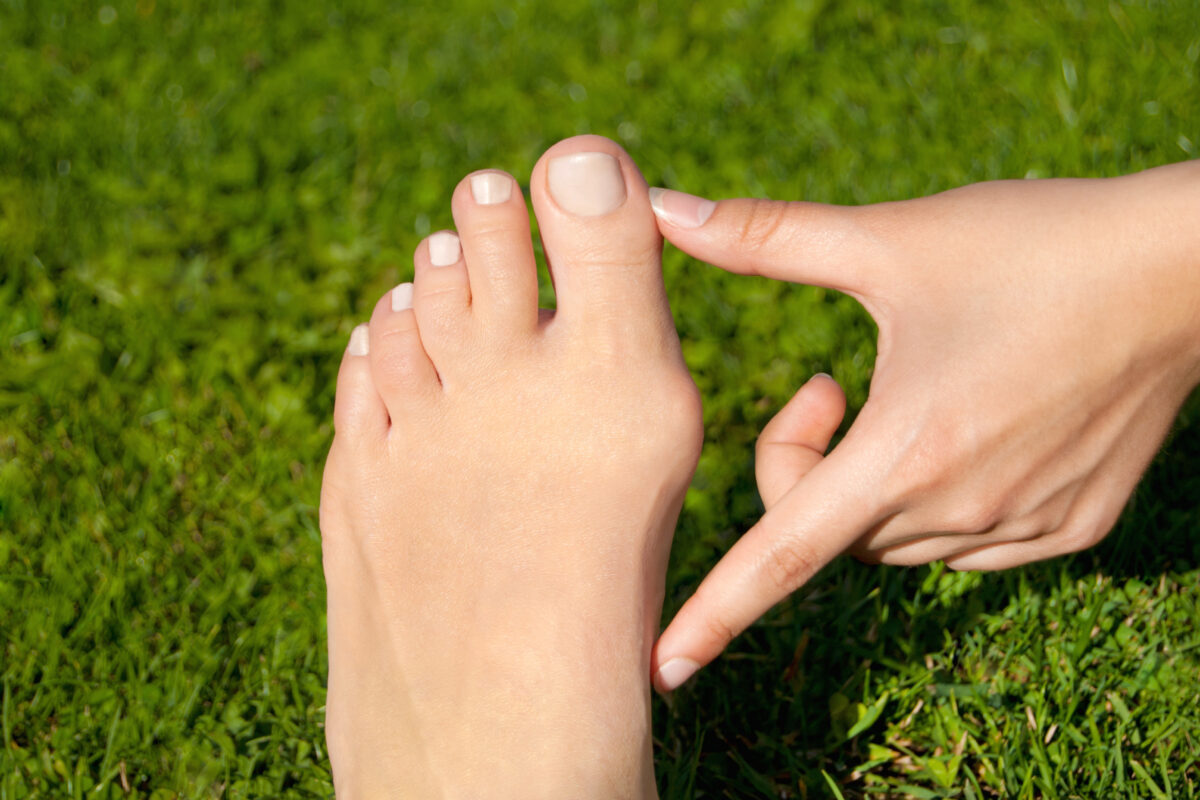
Bunions are one of the most common foot problems we treat, and one of the most misunderstood. That bony bump at the base of the big toe rarely appears overnight, and the good news is that there is a lot you can do about it long before surgery is ever on the table.
What exactly is a bunion?
A bunion is a bony protrusion that develops on the joint at the base of your big toe. It forms when the big toe gradually presses against the toe next to it, which irritates and enlarges the joint and forces it to stick outward. Over time, that joint can become red, swollen, and tender, and the shape of your foot starts to change.
A smaller version, called a tailor’s bunion or bunionette, can form on the outer edge of the foot where the smallest toe sits. Both tend to develop slowly, which is exactly why they are so easy to ignore until they start to hurt.
Why do bunions form?
There is rarely a single cause. In most patients, a bunion is the result of foot mechanics and pressure acting on the joint over many years. The most common contributing factors include:
- Inherited foot structure, the shape of your foot is often passed down through your family
- Footwear that is too narrow, too tight, or sharply pointed
- Uneven weight distribution across the tendons and joints of the foot
- Prior foot injuries
- Inflammatory conditions such as arthritis
It is worth clearing up one myth: high heels and narrow shoes do not single-handedly “cause” bunions out of nowhere, but they absolutely accelerate a bunion in a foot that is already predisposed to one.
The earlier a bunion is evaluated, the more options we have to slow it down, and the less likely surgery becomes.
When should you see a podiatrist?
Plenty of people live with a mild bunion for years without much trouble. It is time to have it looked at when you notice any of the following:
- Persistent pain at the base of the big toe, even in comfortable shoes
- Difficulty finding shoes that fit
- The bump growing visibly larger or the big toe drifting toward the others
- Redness, swelling, or stiffness that does not settle down
A quick in-office exam tells us a lot
We assess the joint, check how you walk, and take convenient in-office X-rays to measure the bunion and rule out other issues, all in a single visit.
How bunions are treated
Bunions are permanent unless they are surgically corrected, but that does not mean surgery is the first step. The goal of early treatment is to relieve pain and pressure, reduce inflammation, and stop, or at least slow, the progression of the deformity. Conservative options we often start with include:
- Roomier footwear with a wider toe box and softer soles
- Padding, separators, and protective bunion shields
- Custom orthotics to correct alignment and redistribute pressure
- Night splints and bunion bandages
- Anti-inflammatory medication or injection therapy
When a bunion is severe, persistently painful, or interfering with daily life, surgical correction may be the right choice. Every doctor at Associated Podiatrists, P.C. is an experienced foot surgeon with operating privileges at a number of area hospitals, so you are in good hands if that step becomes necessary.
Can bunions be prevented?
You cannot change the foot structure you inherited, but you can protect it. Choose shoes that fit properly with a wider instep and a soft sole, and avoid anything sharply pointed, tight, or narrow for everyday wear. If a bunion is already forming, addressing it early is the single best thing you can do to keep it from getting worse.
If your bunion is causing pain, making it hard to find shoes, or changing the way you walk, do not wait it out. A short visit now can spare you a much bigger problem later.